From two stores and a tin can to 31 retailers across the Gulf Coast
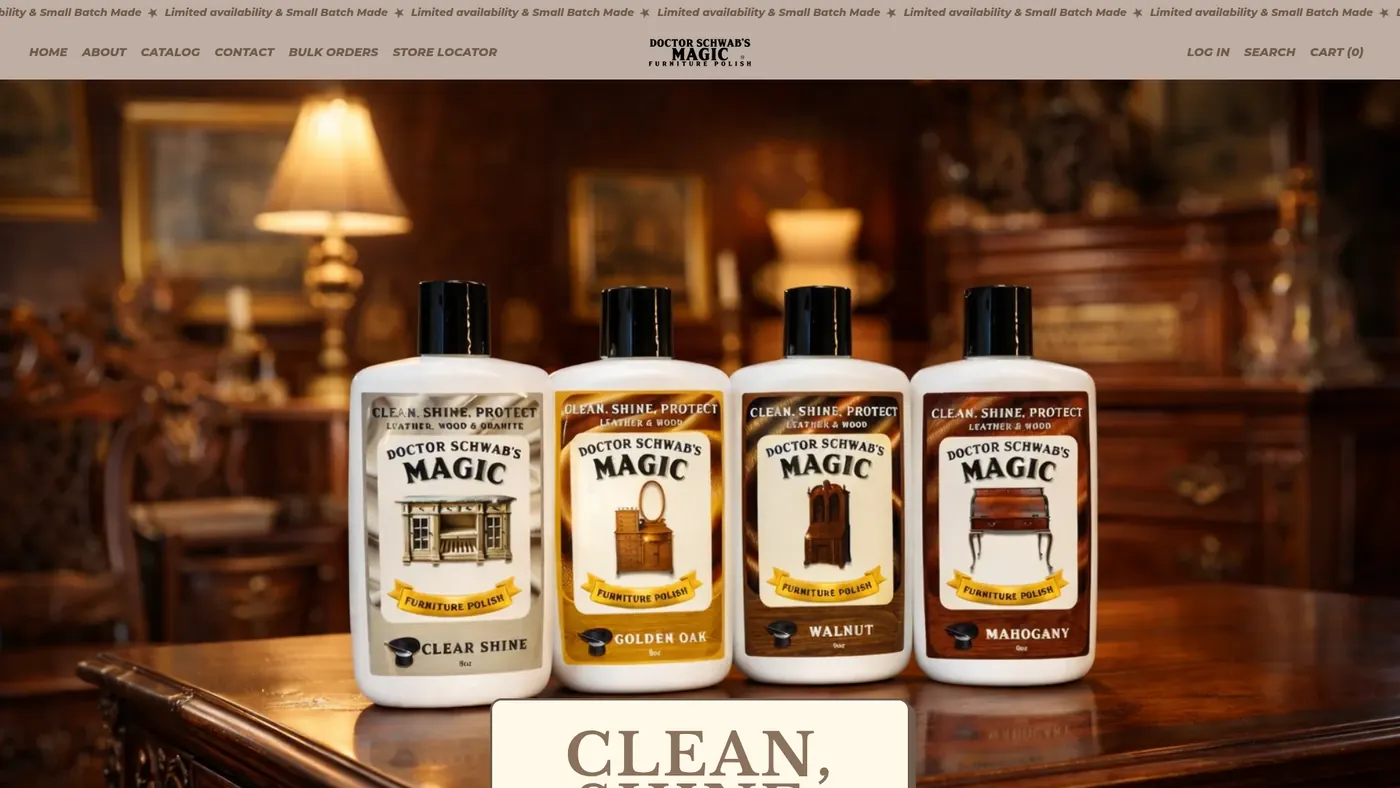
When I first sat down with the Schwab family, the product was incredible and the presentation wasn't. A century-old furniture polish formula, beloved by the antique dealers who knew about it, sold in two stores out of a plain tin can. No website worth visiting. No story a buyer could repeat.
The product didn't need fixing. The frame around it did. So we rebuilt the entire frame — packaging, brand voice, photography, an e-commerce store that could actually convert, and a retail one-pager designed specifically for the buyer at an independent home goods shop.
The packaging was the hinge. We moved off the tin and onto a label and bottle system that looked like it belonged on a shelf next to the premium products buyers already trusted. Same formula. New container. Suddenly the product could be merchandised.
The website did the second half of the work. It told the story of the formula in a way that a store owner could screenshot and forward to a partner. That mattered more than I expected. Most of the early retail wins started as a link someone shared, not a cold pitch.
Two years in, Doctor Schwab's is in 31 stores across the Gulf Coast and growing. The product was always the hero. My job was to make sure nothing about the brand got in its way.
The lesson I keep relearning: if the product is real, the work isn't to invent demand. It's to remove every reason a buyer might hesitate. Packaging, story, photography, the first impression of the website — those are the hesitation points. Fix them and the product gets to do what it was already capable of doing.