How I'd sell an AI product without using the word "AI" three times in the hero
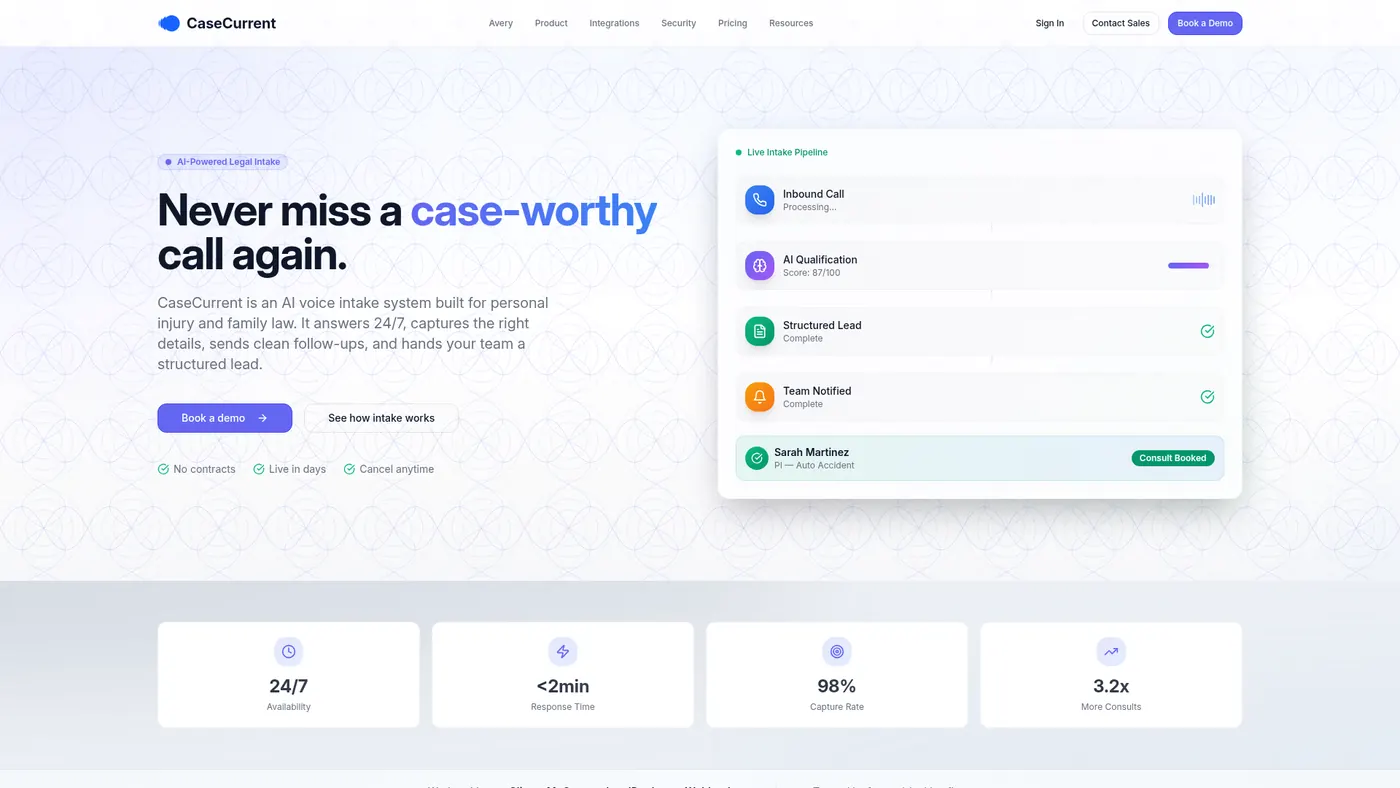
CaseCurrent is an AI voice-intake platform for personal injury and family law firms. The buyer is a managing attorney who has been doing intake the same way for fifteen years and is not impressed by the word "AI." That was the constraint I built the marketing site around.
Most AI startups put the technology in the hero. Big model name. Big promise. "Powered by GPT." That works for a developer audience and almost no one else. For a law firm partner, the relevant question isn't "what model are you using." It's "will this stop me from missing calls at 9 p.m. on a Friday and losing the case to the firm down the street."
So we built the hero around the problem, not the technology. The first thing you see is a clear, plain-language description of what the product does for the firm — captures every intake call, qualifies the lead, books the consult, and hands a clean summary to the attorney in the morning. The word "AI" appears later, where it belongs, as the explanation for how it works rather than the reason to buy it.
The demo was the second hinge. Selling intake software with a screenshot is a losing battle. Selling it with a live pipeline visual that shows a call coming in, getting qualified, and landing on a calendar — that's something a managing attorney can immediately picture happening at their firm.
Everything else on the page exists to remove a specific objection. Privacy. Compliance. What happens if the call is messy. What it costs. Who else is using it. One objection per section. No filler.
The shorthand I use for any AI product marketing site: lead with the outcome the buyer can describe to their partner over lunch, prove it with a demo they can imagine in their own workflow, and let the technology be the punchline, not the headline. That's the version of AI marketing that actually closes.